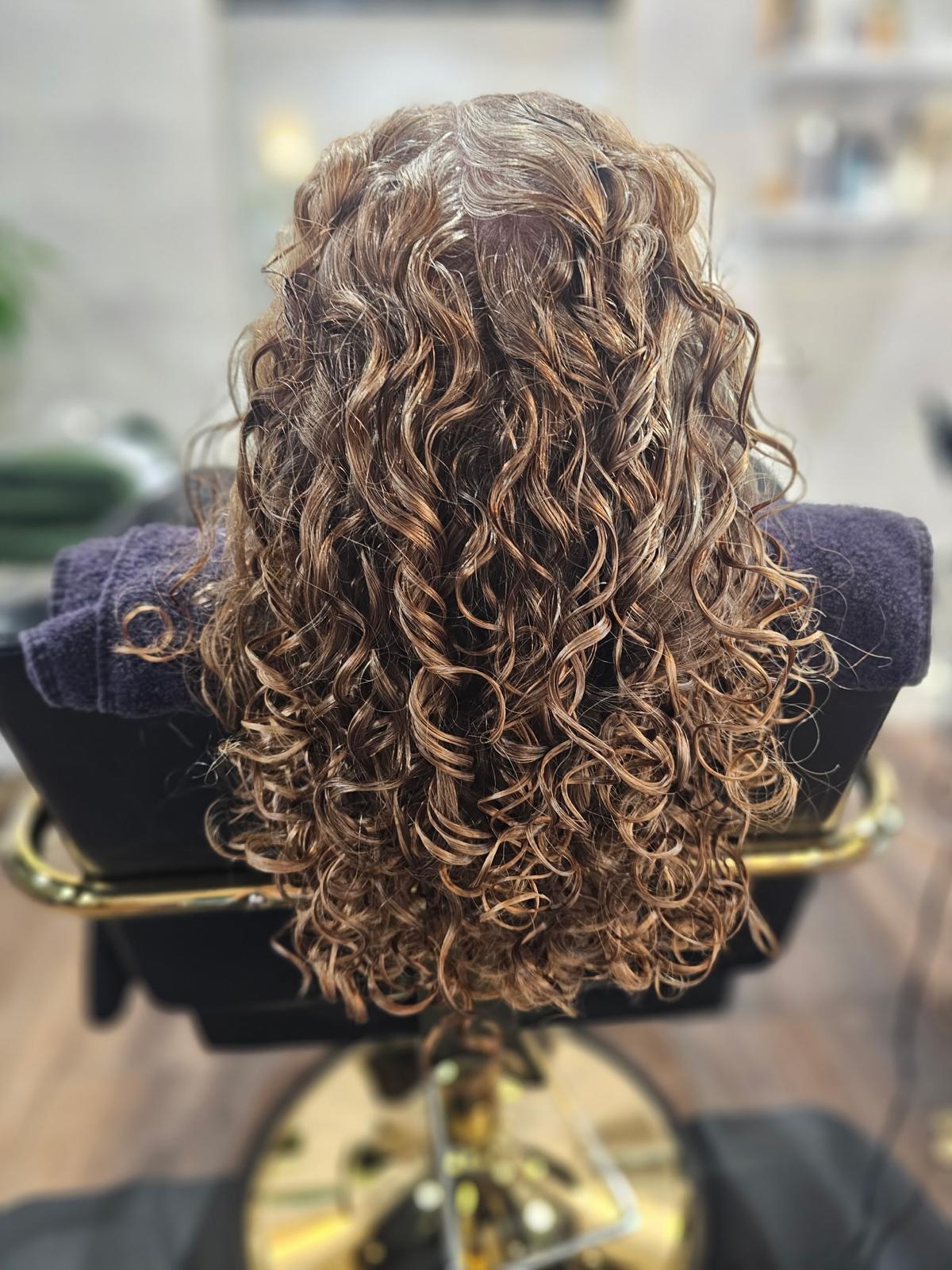
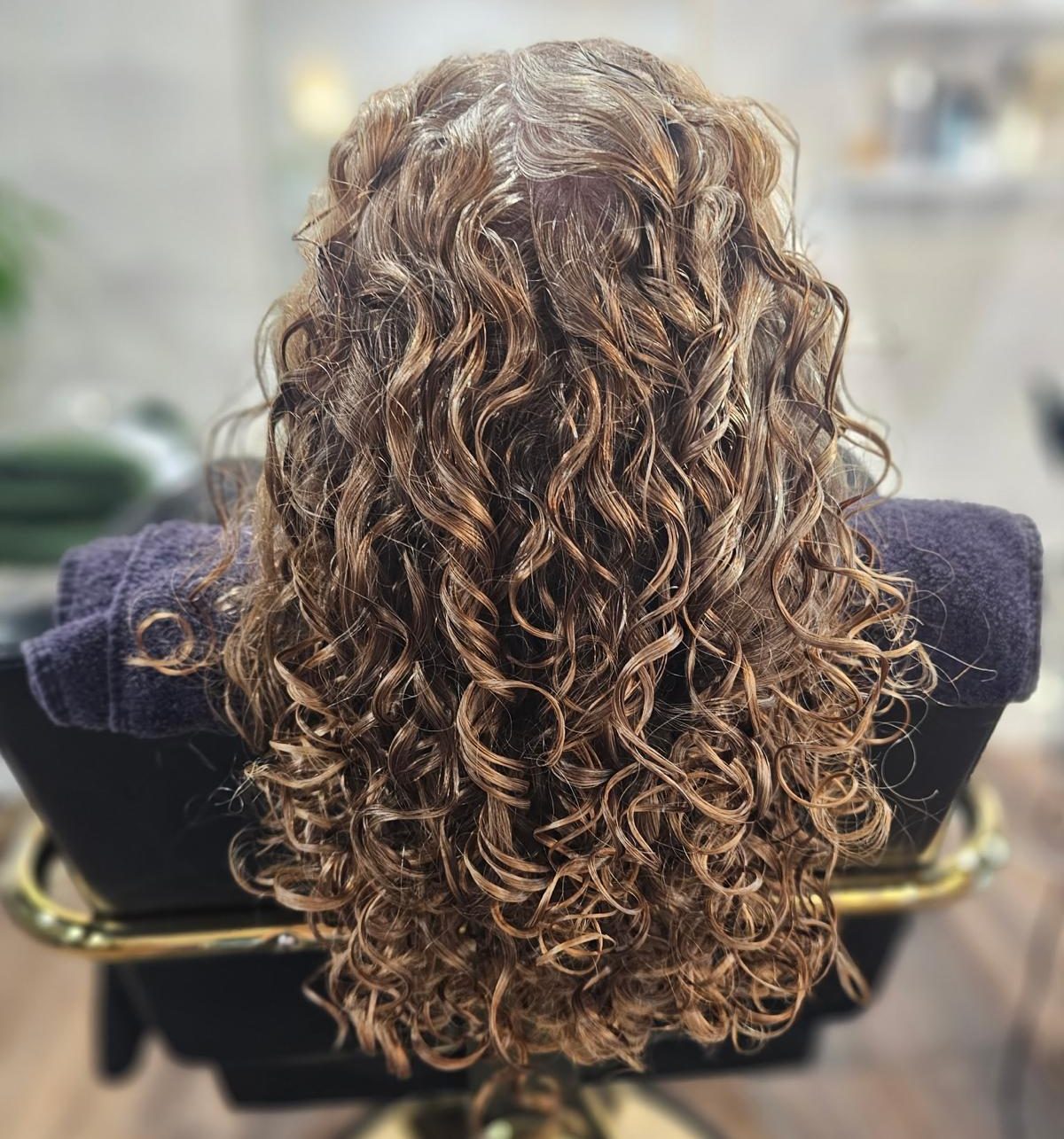
If you’ve ever left a salon with a cut that looked great while wet and then turned into a triangle once it dried, you’re not alone. Curly hair needs a different approach to cutting and styling than straight hair, and once you have the right cut and a simple routine, your curls get a lot easier to live with. At The Cutting Room in Wheat Ridge, Colorado, we cut and style curls, coils, and waves of every texture, for every gender. This guide covers what makes a good curly haircut, how to pick a shape that suits your curl pattern, and how to style curly hair at home so it holds up between visits.
Why curly hair needs a specialized cut
Curly hair shrinks. Depending on your texture, a curl can spring up anywhere from 10% to more than 50% of its stretched length once it dries. Every curl in your head also behaves a little differently: the hair at your nape might be tighter than the hair at your crown, and your front pieces might fall in a different direction than the back.
A traditional cut on wet, combed-straight hair ignores all of that. It cuts to one length that doesn’t exist once your curls dry, and that’s where uneven shapes, bulky sides, and too-short surprises come from.
A curly cut works with how your hair actually lives. Your stylist looks at each curl’s natural pattern, how much it shrinks, and where it wants to sit, and then shapes the hair so it dries into a balanced, intentional silhouette.
Curly cutting techniques, explained
There’s no single “right” way to cut curly hair, and a good curly stylist picks the method that suits your texture and goals. These are the most common approaches.
Dry cutting. The hair is cut dry and in its natural state, often curl by curl. Your stylist can see exactly where each curl falls and how much it shrinks, so there are no surprises when you leave. This works especially well for defined curls and coils.
Curl-by-curl shaping. Individual curls or curl clumps are trimmed one at a time to build shape, remove bulk, and encourage curls to group together. This is ideal for reshaping a grown-out cut or adding volume at the crown.
Wet or damp cutting with curl-aware technique. Some textures, especially loose waves, respond well to cutting damp, as long as the stylist accounts for shrinkage and avoids heavy tension.
Layering for shape. Strategic layers reduce weight at the bottom (goodbye, triangle) and let curls spring up with more volume and movement.
Avoiding razors and thinning shears on some curl types. Razors and thinning shears can fray curly strands and cause frizz on certain textures while they can work beautifully on other curls. Your stylist will choose tools that work best for what you are trying to create.
How to choose the right curly haircut for your texture
Curl pattern charts (2A through 4C) can help you describe your hair, but most heads have more than one pattern, and porosity, density, and strand thickness matter just as much. Use these as starting points, then talk them through with your stylist.
Wavy hair (loose S-shapes). Long or face-framing layers add movement without weighing waves down. A curtain bang or a shag with soft layers can make waves look fuller and more defined.
Curly hair (springy ringlets). Rounded layered cuts build volume and remove bulk at the ends. Curly shags, curly bobs, and longer “halo” shapes are all popular because they show off the curl pattern instead of flattening it.
Coily hair (tight coils and zigzag patterns). Shape is everything. Tapered cuts, rounded silhouettes, and sculpted shapes celebrate density and shrinkage. Many coily clients prefer cutting in a stretched or natural state so the shape is precise.
Short curly cuts. Pixies, tapers, undercuts, and short curly crops are low-maintenance and look great on every texture, with curls left longer on top for definition.
Growing out your curls. If you’re transitioning from heat damage or chemical straightening, regular trims remove damaged ends gradually while keeping as much length as you want.
How to style curly hair at home: a simple routine
The best routine is one you’ll actually keep up. Here’s a reliable starting place that you can adjust as you learn what your curls like.
1. Cleanse gently. Use a sulfate-free, low-tox shampoo or a cleansing conditioner. Most curly heads do best washing 1 to 3 times a week, not daily.
2. Condition generously. Curls are naturally drier because scalp oils have a harder time traveling down a curved strand. Detangle with your fingers or a wide-tooth comb while the conditioner is in, never on dry hair.
3. Style on soaking-wet hair. Apply your leave-in, curl cream, or gel while your hair is still dripping. This locks in moisture and helps curls clump together for definition.
4. Layer your products. A common order is leave-in conditioner, then curl cream for moisture, then gel or mousse for hold. Finer waves may only need a light mousse; thick coils often love a richer cream plus a strong gel.
5. Encourage clumps. Rake products through, then scrunch upward or use a styling brush to form curl groups. Some people like “praying hands” smoothing for frizz control.
6. Dry without disturbing. Air-dry or diffuse on low heat and low speed. Avoid touching your hair while it dries, since that’s the biggest cause of frizz.
7. Scrunch out the crunch. If you used gel, it will dry into a firm cast. Once your hair is 100% dry, scrunch gently (a few drops of oil on your hands will help) to soften it and reveal soft, defined curls.
Refreshing day-2 and day-3 curls
Mist your hair with water or a water-and-leave-in mix, scrunch in a little curl cream or gel where curls have loosened, and let it dry. For flat roots, clip the crown up while it sets or diffuse upside down for a minute.
Protecting curls overnight
Sleep on a satin or silk pillowcase, or wear a satin bonnet or scarf. Gathering hair loosely on top of your head (the “pineapple”) helps preserve your curl pattern and volume for the next day.
Curly hair care tips for Colorado’s dry climate
The Front Range is sunny, dry, and high-altitude, and that’s hard on curly hair. Low humidity pulls moisture out of your strands, and strong UV can dull color and weaken the hair’s outer layer. A few habits make a real difference:
● Lean into moisture: use a weekly deep conditioner or hair mask, especially in winter.
● Add a humectant-light or richer cream during the driest months so products don’t pull moisture back out of your hair.
● Protect against sun with a hat or a UV-protective leave-in when you’re hiking or out on the trails.
● Use a humidifier at home in winter. It helps your skin, too.
● Get regular trims to keep dry, split ends from traveling up the strand.
How often should you get a curly cut?
Most curly clients do well with a cut every 8 to 12 weeks. Shorter, more structured shapes, such as tapers and short crops, usually need a visit every 4 to 8 weeks to keep their outline crisp. If you’re growing your hair out or transitioning, a light shaping every 3 months keeps your ends healthy without losing much length.
Book a curly cut at The Cutting Room in Wheat Ridge
The Cutting Room is an inclusive, sustainable salon serving Wheat Ridge, Arvada, Lakewood, and the greater Denver area. Our stylists work with every hair texture and every gender, and we use low-tox products that are kind to your hair and the planet. Come in with your curls styled the way you usually wear them, bring photos of cuts you love (and ones you don’t), and we’ll build a shape and routine that fit your life.
Ready for curls you actually love? [Book your curly cut online] or call us to find the right stylist for your texture.
Frequently asked questions about curly haircuts
Should I come to my curly cut with clean or dirty hair? Come with clean, dry hair styled how you usually wear it, without clips, buns, or ponytails. This shows your stylist your natural pattern and how you style day to day.
Is a dry cut better for curly hair? Dry cutting is a great option for many curl types because it shows exactly how each curl falls. Some waves and textures do well with damp cutting too. Your stylist will recommend the method that suits your hair.
How do I stop my curly hair from getting frizzy? Apply products to soaking-wet hair, use a gel for hold, avoid touching your hair while it dries, and sleep on satin. In Colorado’s dry air, extra moisture is often the biggest fix.
Can you cut curly hair if I have color or heat damage? Yes. A curly cut can gradually remove damaged ends while keeping your length, and your stylist can suggest treatments to bring back curl definition.
Do you cut curly hair for all genders? Absolutely. The Cutting Room serves all genders and all hair textures, from loose waves to tight coils.